Hard Hats On: A First Look Inside deCentral’s Future Art Space in Bangkok
Central Group’s new contemporary art organization opens in Bangkok and Chiang Mai in 2027, after a year spent listening to Thailand’s artists.
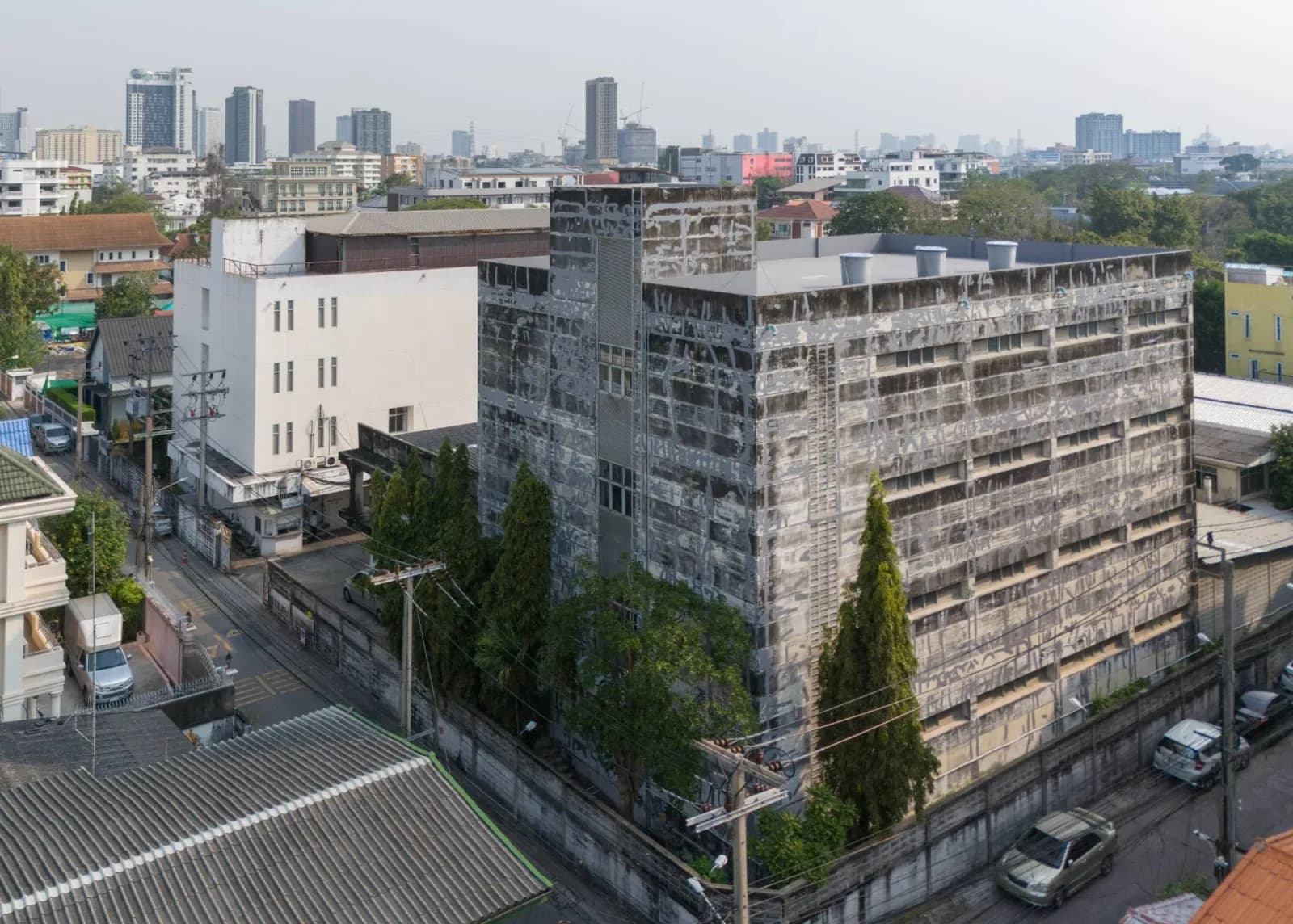
The former Central Garment Factory in Phra Khanong, future home of deCentral Bangkok. Courtesy of deCentral
On a warm early afternoon earlier this week, I joined a group of journalists in the main building of the former Central Garment Factory in Phra Khanong: a five-building complex from 1978 where fabric was once produced, and which is now a construction site. There, the deCentral team, together with the architects overseeing the renovation, introduced the project: what the organization sets out to be, and how the old factory will be adapted to house it. We were then split into small groups, handed hard hats and led through the site.
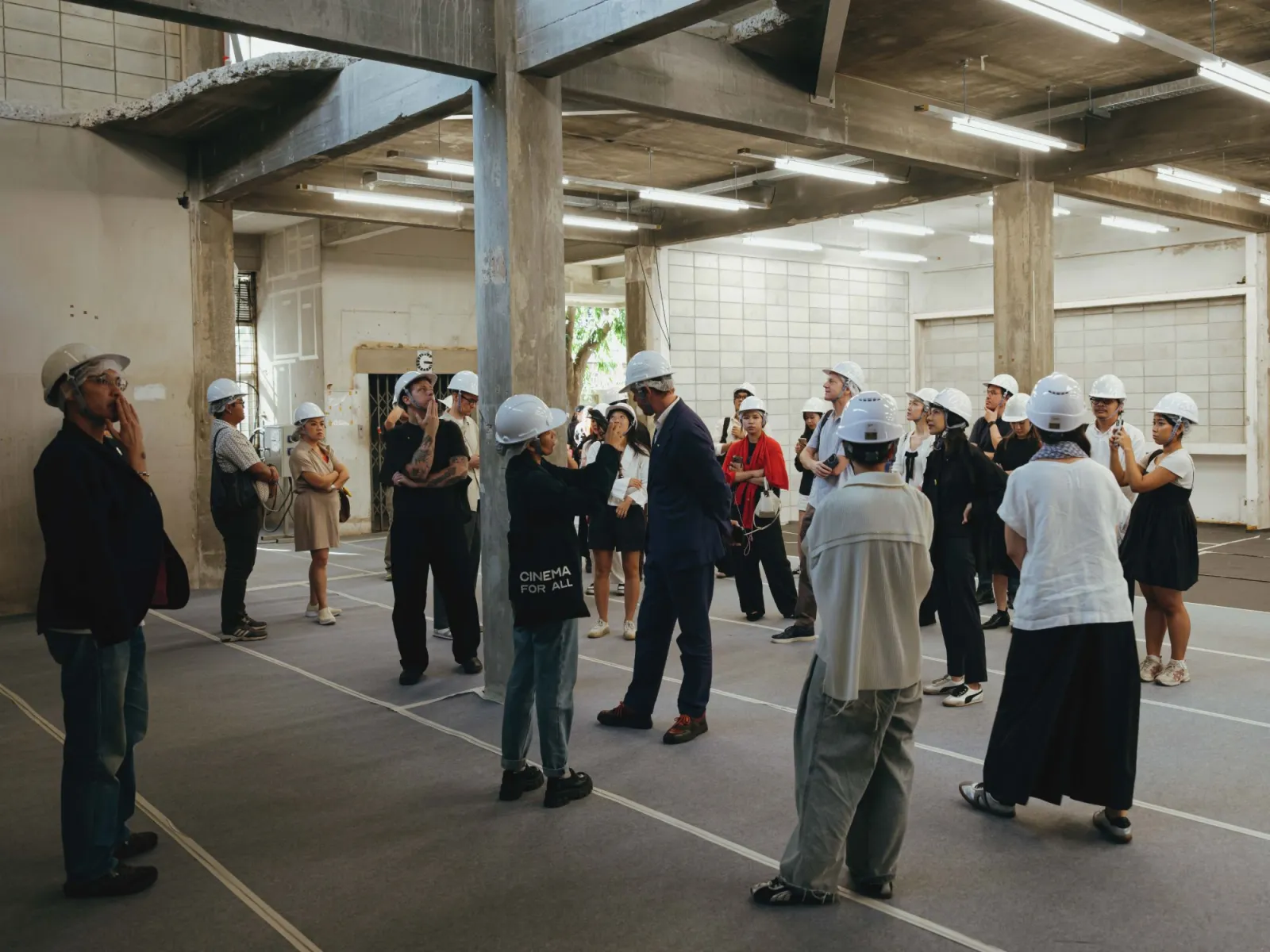
The hard hat tour of the former Central Garment Factory. Courtesy of deCentral
The building will reopen in the second quarter of 2027 as deCentral, a new contemporary art organization founded by Central Group, with a second site in Chiang Mai. It joins a Bangkok scene increasingly shaped by private patronage: in 2024, philanthropist Marisa Chearavanont opened Bangkok Kunsthalle in the former Thai Wattana Panich printing house in Chinatown, another industrial shell given a second life through art.
Where the Kunsthalle started from its iconic brutalist home, with artists invited to respond directly to its spaces, deCentral began with a year of listening. Set up as a social enterprise, it traveled across Thailand meeting artists, curators, writers and teachers to understand the conditions they work in. Those conversations produced a framework called Practice, Respond, Support, and several programs are already running, among them Artist Production Grants, Monsoon School, Practicing Practice(s) and Travel Grants for Writers.
“Exhibitions are only one outcome of artistic research,” says Artistic Director Zoe Butt. “We want to nurture the conditions for artists and curators to spend time researching, experimenting and developing ideas together.” Seen this way, the factory is less a starting point than the result of a year of listening.
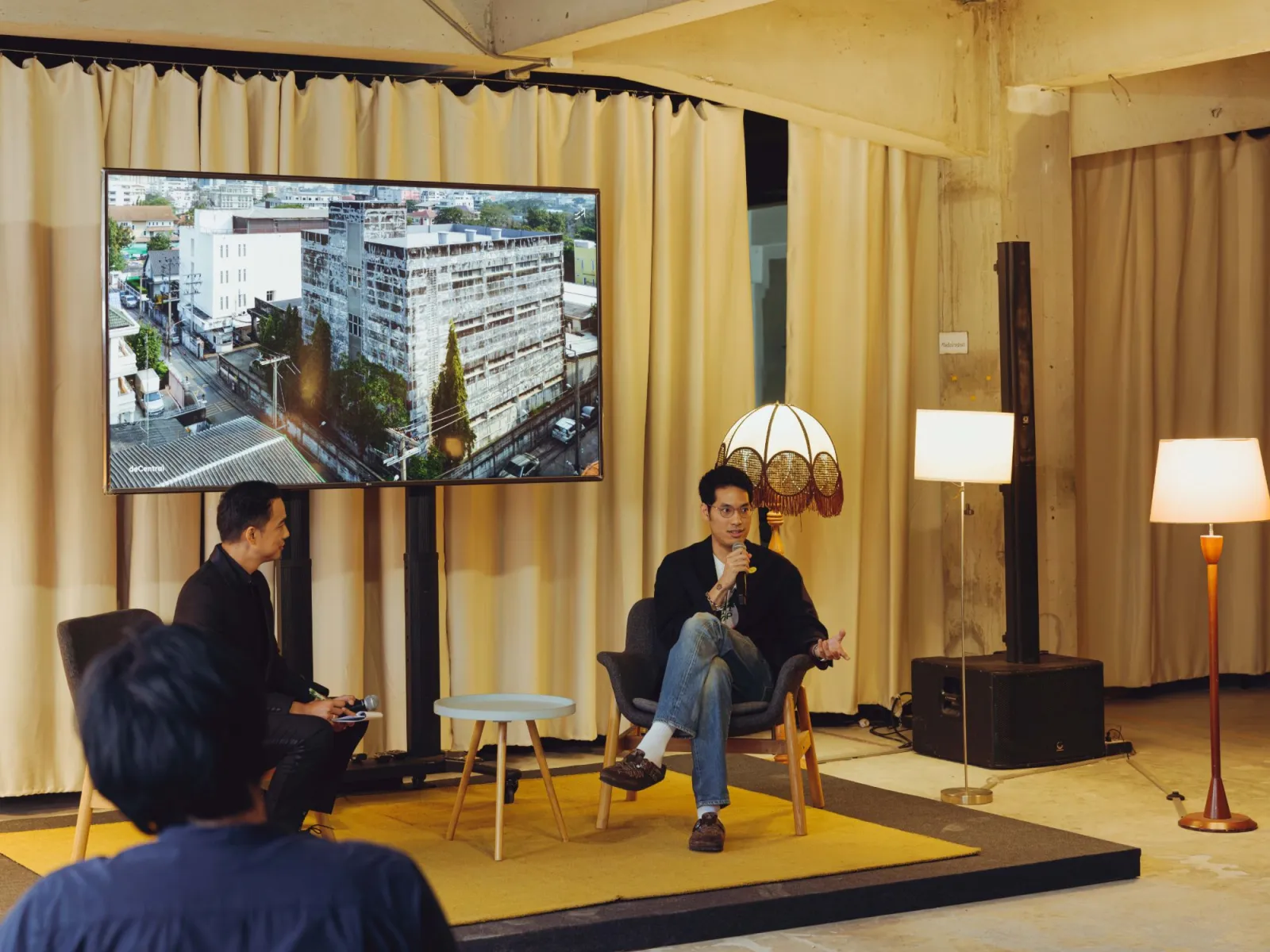
The deCentral presentation inside the former factory. Courtesy of deCentral
Hong Kong studio BEAU is converting the five buildings into a 2,740-square-meter arts cluster with exhibition spaces, room for public programs, casual dining and events. The approach is adaptive reuse: keeping and adapting what is already there rather than starting over, so that the factory’s industrial character, and its ties to the neighborhood, remain.
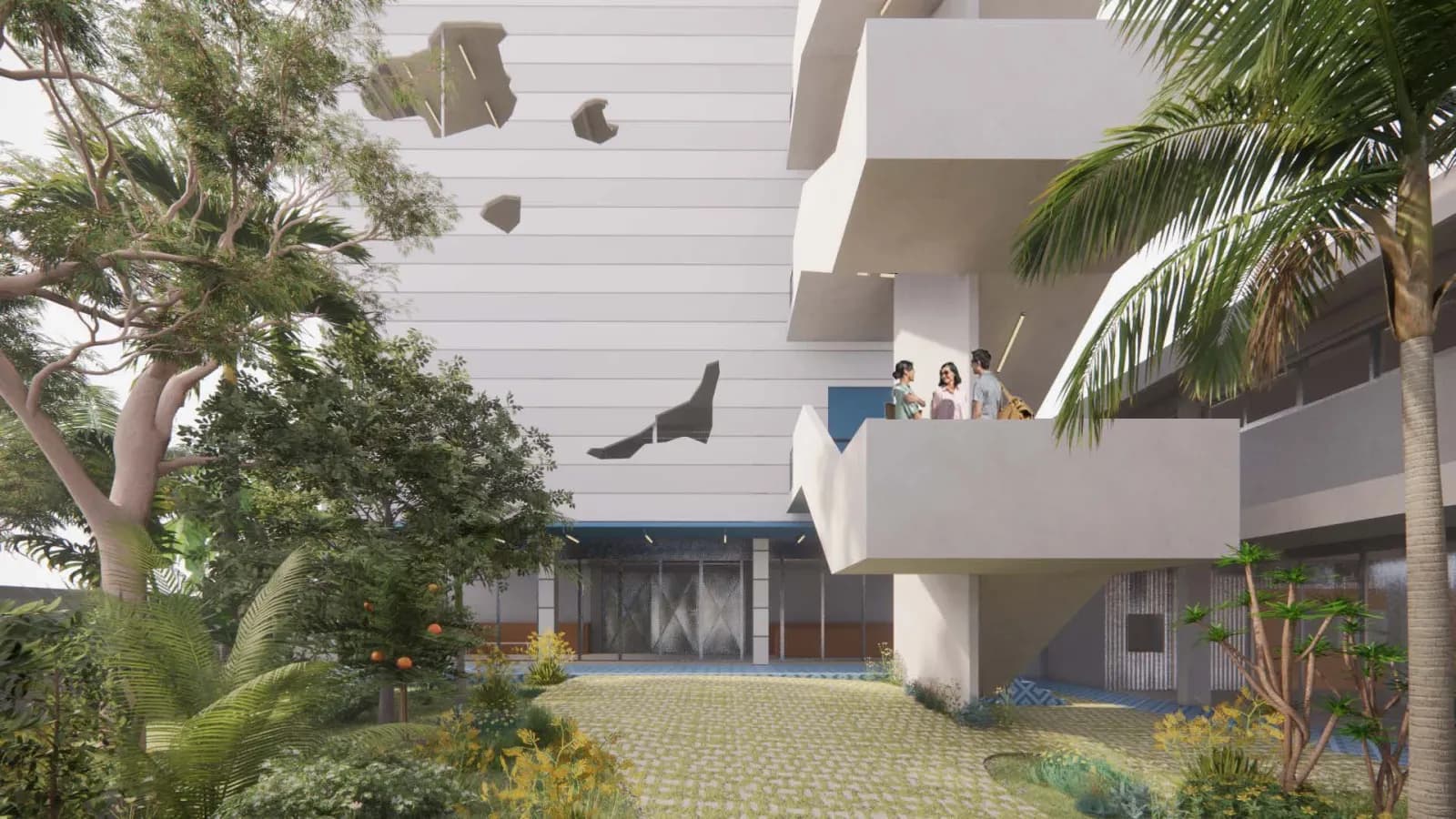
Rendering of deCentral Bangkok by BEAU architects. Courtesy of deCentral
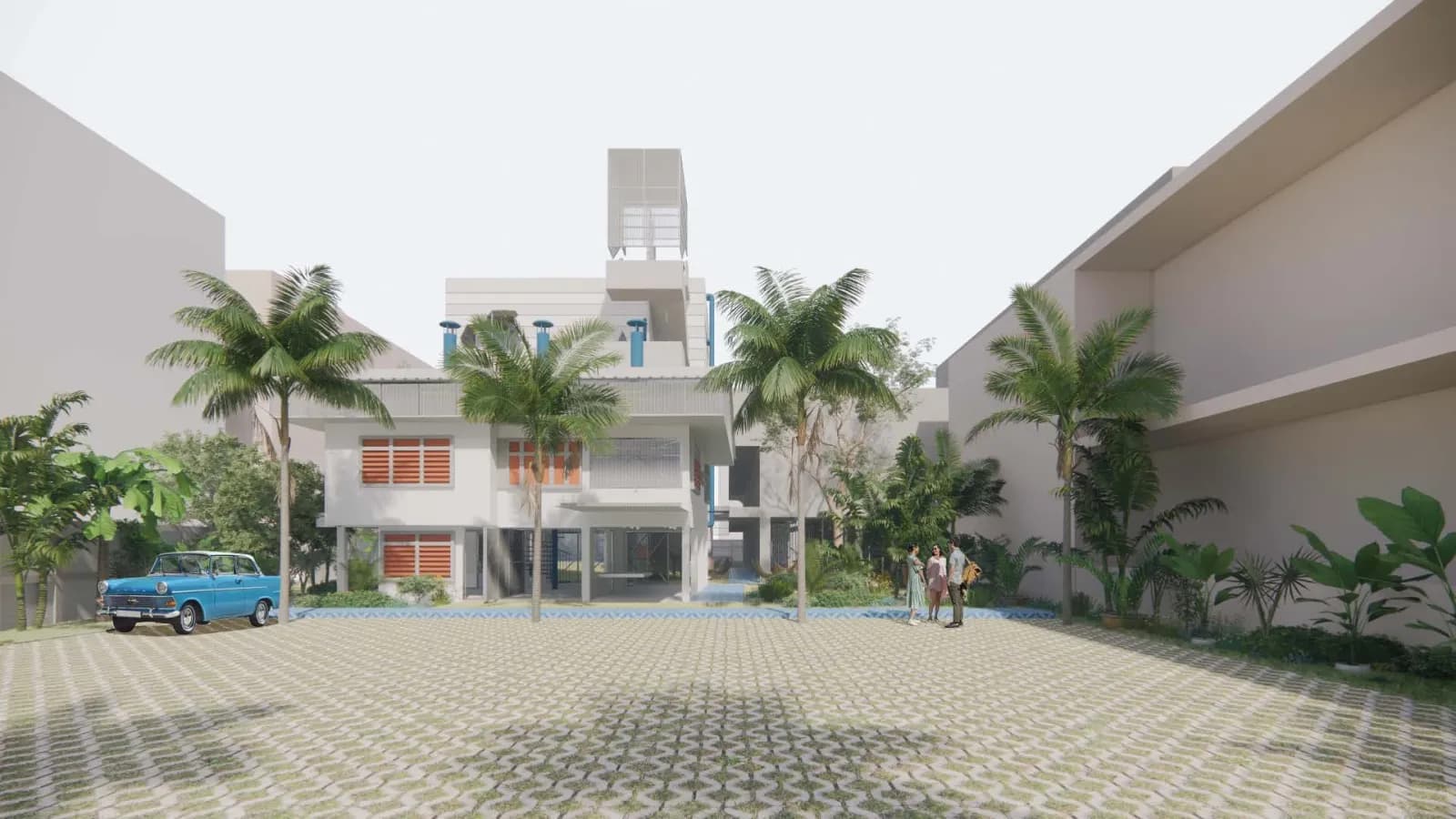
Rendering of the courtyard of deCentral Bangkok by BEAU architects. Courtesy of deCentral
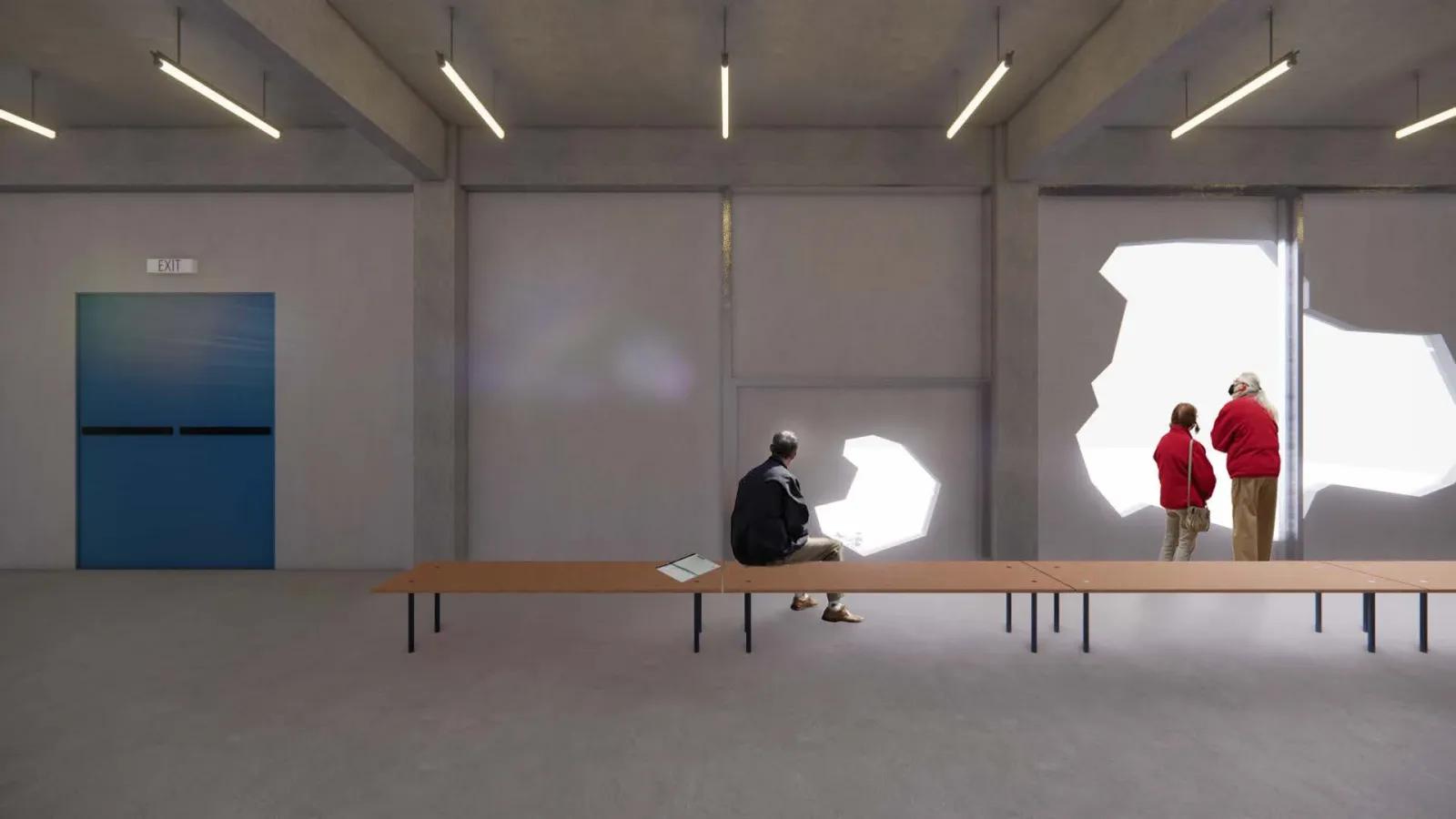
Rendering of an exhibition space by BEAU architects. Courtesy of deCentral
The opening program is Carried Forward, the first of three exhibitions in Khâat (คาด): Binding, Tracing, Fabulating, a year-long project developed with the international non-profit KADIST and presented in both Bangkok and Chiang Mai. The title borrows the Thai word khâat, which means both to speculate and to bind, and the exhibition looks at how history and systems of power keep shaping the present, bringing together artists from Thailand and Southeast Asia with works from KADIST’s international collection. In Bangkok, it will be accompanied by solo exhibitions by Candice Lin and Puangsoi Aksornsawang.
“deCentral is not arriving with all the answers,” says Executive Director Punn Chirakiti. “We are here to listen, to collaborate and to contribute to Thailand’s artistic ecology.” For now, the factory is still a construction site; exhibition dates will be announced ahead of the opening.
For more on Bangkok’s art institutions, see our guide to art galleries and museums in Bangkok, and check Bangkok art events this week for what’s on now.